
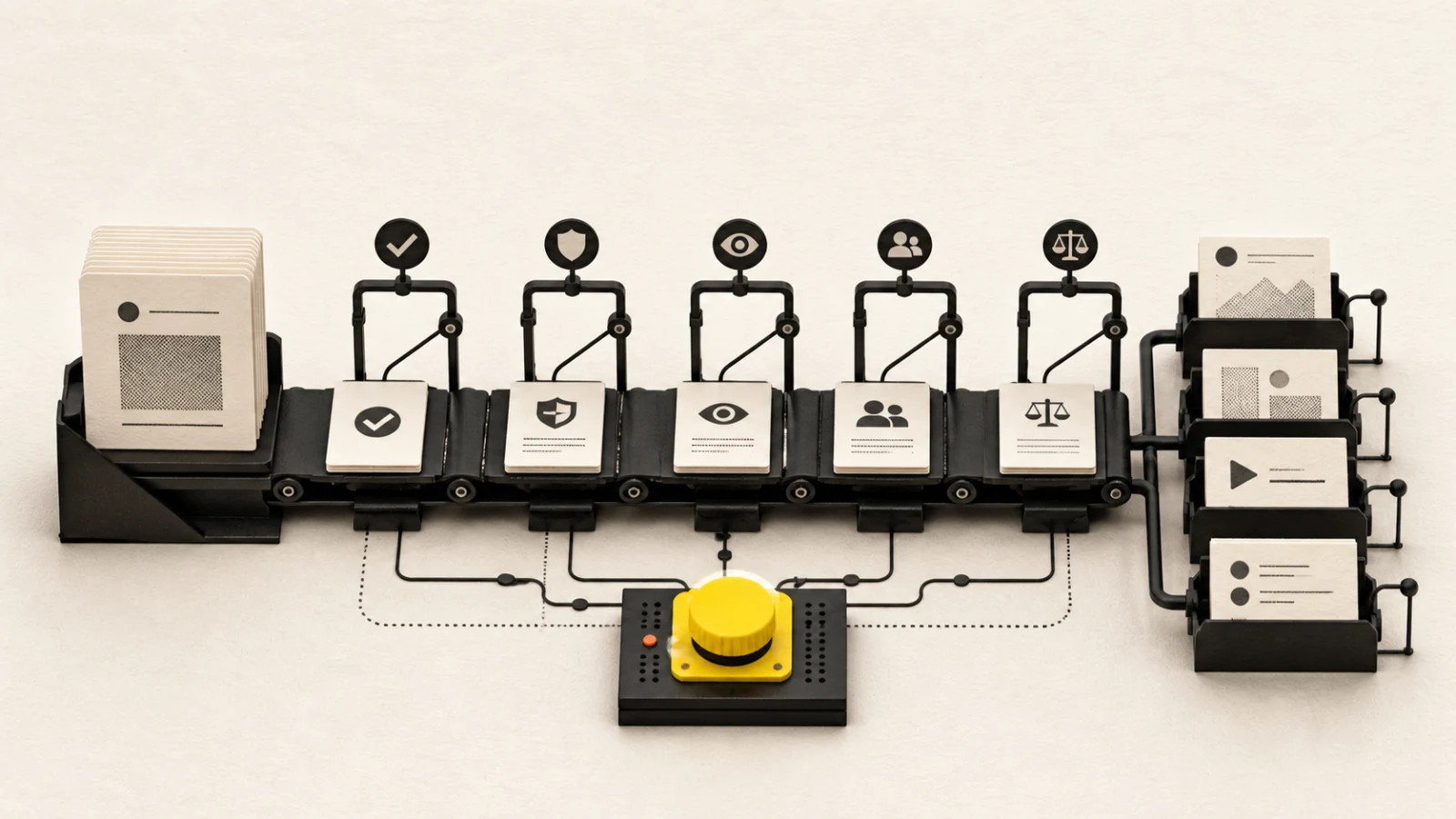
A publishing checklist exists to prevent avoidable mistakes in the final handoff. It should be short, specific, and tied to the actual publish action.
Check these items before publish
- approved version is current;
- copy matches the approved brief;
- asset is final and on brand;
- link and UTM are correct;
- rights and disclosures are present;
- platform, account, and privacy settings are correct;
- publish time matches the plan;
- backup owner is assigned.
Do not overload the checklist
If a checklist has too many items, nobody will use it. Keep only the checks that can stop a bad publish or prevent a costly rework.
Make the failure mode explicit
The checklist should define what happens when something is wrong:
- fix and resubmit;
- escalate to reviewer;
- delay scheduling;
- cancel publish;
- replace the asset.
Pair it with the approval record
The checklist should verify the approved version, not replace it. That is why it works best beside the social media approval workflow template.
Separate universal and channel-specific preflight
Universal checks cover identity, approved version, objective, audience, claims, rights, disclosure, accessibility, destination, timing, owner, and recovery. Channel-specific checks cover the actual format and native settings: image count, aspect ratio, video duration, cover, title, first comment, link placement, collaboration tags, audience controls, reply permissions, synthetic-media disclosure, and other provider requirements.
Verify requirements against current official platform and provider documentation. A copied checklist becomes unsafe when platform behavior changes, so record the last review date and owner for each channel module.
Check the external handoff
Before scheduling or publishing, confirm the exact account, credential health, workspace authorization, timezone, queue or scheduled time, media availability, destination URL, tracking parameters, and preview. Run server or provider validation where available, but do not treat technical validation as editorial approval.
For multi-channel content, keep target-level state. One successful destination must not hide another target that is rejected, delayed, or unknown.
Define stop and recovery actions
The checklist must say what to do when a check fails: repair and resubmit, reopen approval, replace the asset, postpone the slot, cancel the target, escalate to a specialist, or move to manual review. Assign a recovery owner before the publish window.
After delivery, retain timestamps, public links or provider references, failure reasons, attempts, and reconciliation. An ambiguous response should trigger investigation rather than an unsafe automatic retry.
Checklist implementation rules
- Use the exact approved version and destination identity
- Keep universal policy checks separate from current channel requirements
- Verify links, tracking, media, accessibility, rights, disclosure, and native settings
- Test credential and provider validation without exposing secrets
- Record target-level published, failed, cancelled, and unknown outcomes
- Assign repair, retry, reconciliation, and incident owners
- Review the checklist after platform changes and real failures


