
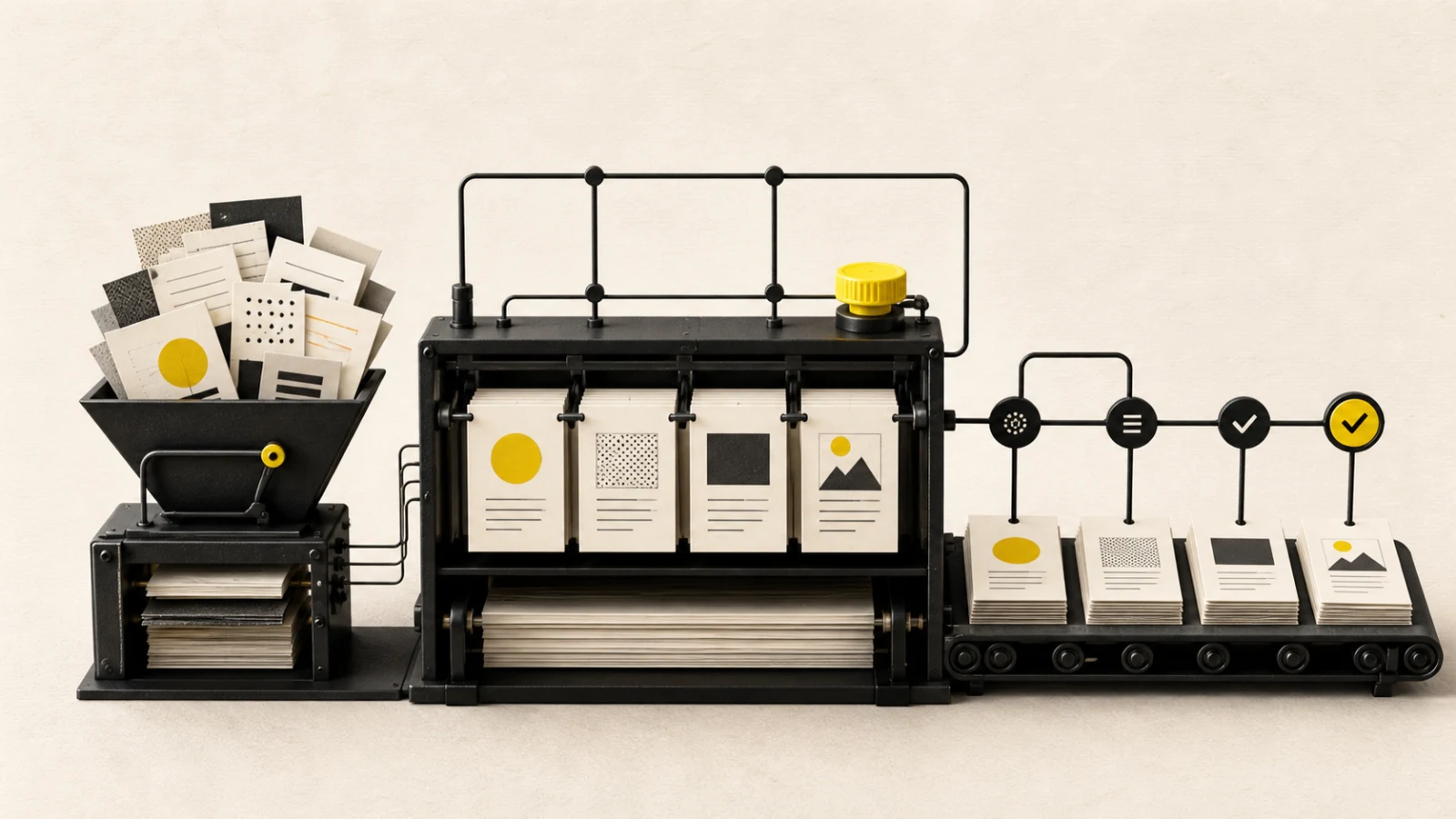
Content batching works when the team groups similar work and minimizes switching costs. It fails when the batch is too large to review, revise, or publish cleanly.
Batch by task type
- idea generation;
- outline writing;
- draft writing;
- asset creation;
- review and correction;
- scheduling and distribution.
Each task type benefits from a different environment and time block.
Batch by content pattern
Group items that share:
- the same platform;
- the same format;
- the same campaign;
- the same CTA;
- the same visual style;
- the same review owner.
This makes reuse and editing much faster.
Keep a hard stop on scope
A batch should have a clear output target. For example:
- six captions;
- four short videos;
- three educational graphics;
- two approved posts ready to schedule.
Without a boundary, batching becomes open-ended production.
Protect the final review step
Do not treat batching as a shortcut around quality control. Every batch still needs:
- accuracy review;
- rights check;
- channel fit;
- CTA check;
- final version control.
If the batch saves time upstream but creates more rework downstream, the process is too loose.
Use batching with a calendar
Batching is easiest when the calendar already tells the team what must be published and when. For a practical planning layer, use the social media calendar guide.
Prepare a decision-ready batch packet
Before the session, assemble the approved topics, briefs, source evidence, claims, brand constraints, channel roles, formats, destination links, rights status, due dates, and reviewers. Group work by cognitive mode: research, outlining, writing, design, recording, editing, adaptation, metadata, or scheduling.
Do not ask a batch session to resolve unresolved strategy. If the audience, objective, evidence, offer, or approval authority is unclear, move the item back to planning. A smaller batch of decision-ready work is more productive than a large list of ambiguous ideas.
Use stage gates instead of one giant production day
Separate the workflow into bounded stages. A practical sequence is brief approval, source collection, first drafts, editorial review, channel adaptation, asset production, accessibility and rights review, final approval, scheduling, and post-publish review.
Define an exit condition for each stage. Drafting may require a complete hook, argument, evidence, and CTA; asset production may require correct dimensions, safe zones, captions, and source files; scheduling may require the approved version, account confirmation, timezone, and valid link.
When work fails a gate, send it to a named owner with one reason. Do not let incomplete items silently enter the next batch and create hidden rework.
Measure the economics of batching
Track planned items, completed items, accepted-first-review rate, corrections, elapsed time, focused production time, approval delay, unused drafts, and published outcomes. Compare the workflow with a similar non-batched period rather than claiming that a busy day created savings.
Batching is successful when it reduces context switching and late work without lowering relevance, evidence quality, accessibility, or channel fit. If it creates excess inventory or makes the team slow to respond, reduce the horizon and keep more capacity open.
Batch workflow checklist
- Topics, objectives, sources, rights, and briefs are ready before production
- Work is grouped by format or cognitive mode
- Each stage has an owner, exit condition, and handoff
- Review capacity matches the number of drafts produced
- Reactive and high-uncertainty work remain outside the batch
- Rework, unused inventory, and published learning are reviewed


