A social media strategy tells you what matters. An operating system makes sure the work actually happens.
That distinction becomes obvious on a difficult Tuesday. A launch date moves. Legal asks for one more review. The designer uploads a replacement asset, but the scheduled post still points to the old file. A regional manager sends feedback in a chat thread nobody else can see. The team is busy, yet nobody can answer a basic question with confidence: what is approved to publish next?
The answer is not another planning meeting. It is a small, explicit system that carries each piece of content from an idea to a verified outcome.
The short version
A dependable social media operating system has seven connected parts:
- A one-page strategy that defines audience, outcomes, channels, and boundaries.
- A shared intake where ideas arrive with enough context to evaluate them.
- A content calendar that represents commitments, not a wish list.
- A production workflow with one owner and one current version per post.
- Approval rules based on risk instead of organizational habit.
- A publishing layer that preserves channel-specific variants and status.
- A review rhythm that turns results and failures into the next decision.
You can run this system with a small team. The goal is not maximum process. The goal is to make state, ownership, and next actions visible.
Start with the decisions your strategy must make
Many strategy documents collect observations without making choices. They describe the audience, list every platform, and include broad goals such as “increase engagement.” Then the team still has to decide what to publish every morning.
A useful operating strategy should fit on one page and answer six questions:
| Decision | What a usable answer looks like |
|---|---|
| Business outcome | “Generate qualified product conversations,” not “grow social” |
| Primary audience | A specific buyer, user, creator, or community with a recognizable problem |
| Content promise | What people can reliably learn, feel, or do after following you |
| Content pillars | Three to five territories that connect expertise to audience demand |
| Channel roles | The job each network performs in the journey |
| Guardrails | Claims, topics, assets, and actions that require extra care |
If an item does not change a publishing decision, move it to background research. Strategy earns its place by helping the team say yes, no, now, or later.
Give every channel a job
Publishing the same mix everywhere creates activity without direction. Assign a role to each channel instead.
- LinkedIn might develop category expertise and start professional conversations.
- Instagram might make the people, process, and visual proof behind the brand tangible.
- TikTok or Reels might test hooks and make complex ideas easier to enter.
- YouTube might hold durable demonstrations and deeper education.
- X, Threads, Bluesky, or Mastodon might support fast feedback and practitioner dialogue.
- Reddit might be appropriate for useful, context-rich participation where community rules allow it.
The role should determine the format, cadence, and success signal. It should also make it acceptable to skip a channel that does not serve the strategy.
Design one path from idea to evidence
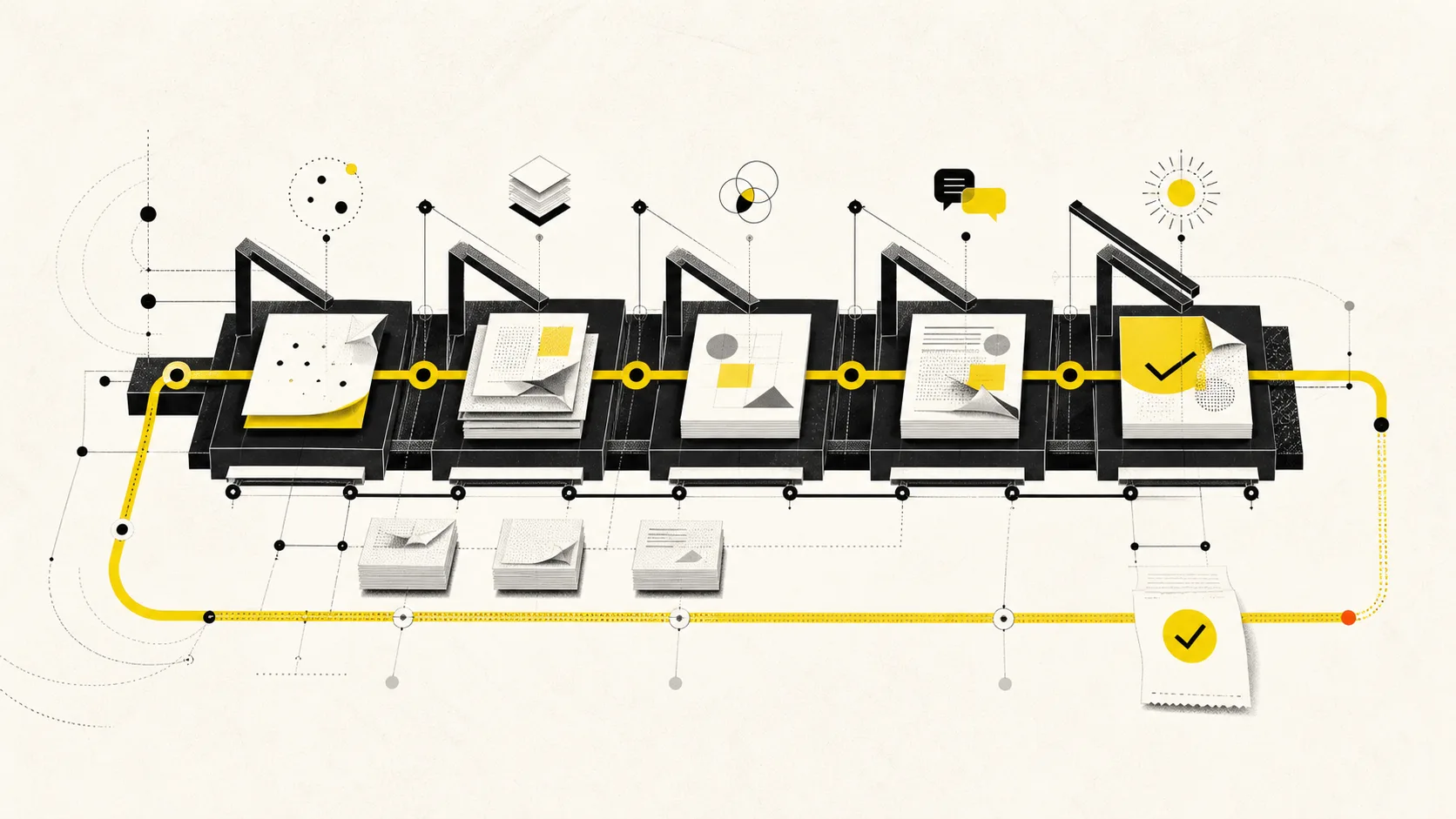
The core of the operating system is a state model. Every post should occupy one clear state, and every state should have an exit condition.
| State | The question it answers | Exit condition |
|---|---|---|
| Idea | Is this worth developing? | Brief accepted or declined |
| Briefed | What are we making and why? | Owner, audience, outcome, and due date are clear |
| In production | Is the current version being created? | Copy and assets are ready for review |
| In review | What feedback is still open? | Required reviewers respond |
| Approved | Is this exact version safe to schedule? | Final content and destination are locked |
| Scheduled | When and where will it publish? | Provider accepts the schedule |
| Published | Did the provider confirm success? | Public identifier or permalink is recorded |
| Failed | What prevented completion? | Retry, replacement, or cancellation decision is recorded |
| Reviewed | What did we learn? | Insight is attached to a future action |
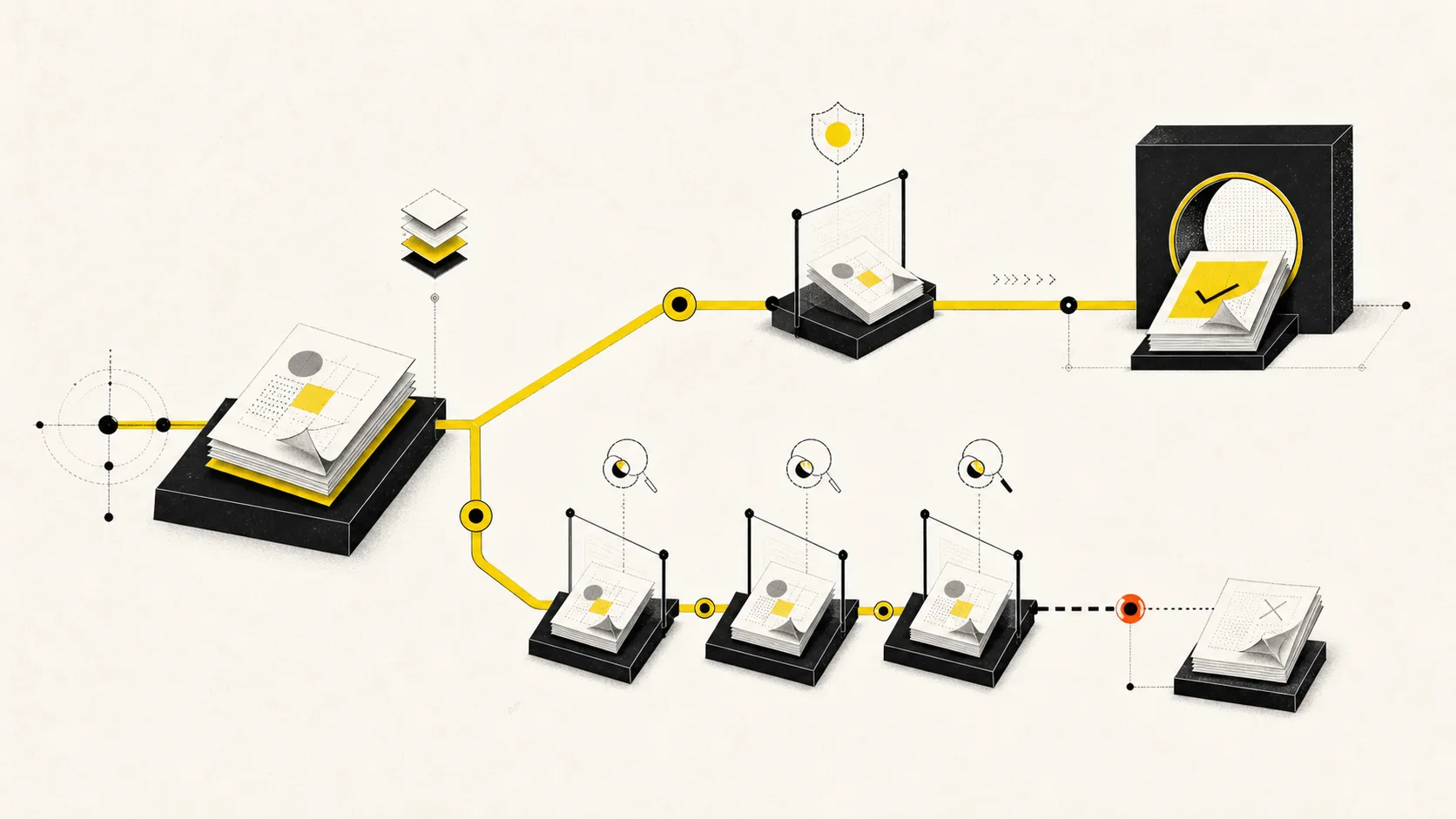
This model prevents a dangerous shortcut: treating “scheduled” as “done.” A scheduler accepting a request does not guarantee the network published it. Keep scheduled, published, and failed separate.
BlendDuck’s shared calendar and publishing history are designed around that separation, so the team can see both the plan and the operational result.
Make the content brief small enough to use
A brief should remove ambiguity without turning every caption into a campaign plan. For routine social content, require only the information that another person needs to finish or review the post:
- Audience moment: what is happening when this person encounters the post?
- Single outcome: what should they understand, feel, or do next?
- Core idea: one sentence that must survive every channel adaptation.
- Proof: product evidence, customer observation, example, source, or demonstration.
- Deliverables: channels and formats required.
- Constraints: deadline, embargo, legal language, rights, accessibility, and localization needs.
- Owner: one person accountable for moving the work forward.
Do not ask writers to invent missing strategy inside the caption box. If the audience, proof, or intended action is unclear, the item is still an idea—not a draft.
Build a calendar that represents capacity
A content calendar is useful only when its commitments fit the team’s actual production capacity. Start with the limiting resource, which is often design, video editing, stakeholder review, or subject-matter access.
Suppose a two-person team can reliably complete eight meaningful assets per week. A calendar with twenty custom posts is not ambitious; it is inaccurate. Instead, design a mix:
- two original anchor pieces,
- three channel-specific adaptations,
- two community or customer-response posts,
- one experimental format,
- deliberate empty space for timely work.
The empty space matters. A calendar filled to 100 percent capacity has no room for a late approval, an unexpected opportunity, or a provider failure. Plan to the rhythm you can sustain during an ordinary week, not the volume you can reach during a sprint.
For a detailed setup method, use the social media calendar guide.
Match approval depth to content risk
Requiring the same review for every post creates two bad outcomes: low-risk work waits unnecessarily, and reviewers become too numb to notice genuinely risky details.
Use a simple risk model:
- Routine: evergreen education, approved product facts, community replies within guidelines. One editorial review or self-approval may be enough.
- Elevated: campaigns, paid partnerships, customer stories, competitive claims, executive voice, sensitive community topics. Require a named subject or brand reviewer.
- Critical: regulated claims, financial or legal statements, crisis responses, embargoed announcements, security incidents. Require explicit specialist approval and a locked final version.
Approval must apply to a specific version. If the caption, asset, destination, or link changes after approval, define which changes invalidate it. Otherwise “approved” becomes a vague memory rather than an operational control.
Preserve the core idea, not identical copy
Multi-channel publishing should share context while allowing native execution. Store a canonical message—the claim, story, evidence, and intended action—then create a variant for each destination.
The LinkedIn version may lead with an operating lesson. The Instagram carousel may reveal the framework one step at a time. The short video may demonstrate the painful before-state in its first seconds. The Reddit contribution may remove the promotional call to action and provide the full method in the post itself.
One source of truth does not mean one block of text. It means the variants can be traced back to the same approved idea.
Add a publishing checklist that catches expensive mistakes
Before a post enters the schedule, verify the details that are easy to miss when the team is rushing:
- correct workspace, brand, account, and destination;
- channel-specific copy, mentions, tags, and link behavior;
- media dimensions, duration, order, thumbnail, captions, and alt text;
- rights and consent for people, music, customer material, and third-party assets;
- campaign tracking and landing-page readiness;
- local date, time zone, embargo, and spacing from nearby posts;
- approval attached to the exact version being scheduled;
- named owner for monitoring replies and handling failure.
This is not bureaucracy. It is a short pause before an irreversible public action.
Review decisions, not vanity totals
A monthly report often becomes a museum of numbers. Replace it with a decision review.
For each content pillar and channel, ask:
- What outcome were we trying to influence?
- Which posts created meaningful evidence of that outcome?
- What pattern is strong enough to test again?
- What consumed effort without producing useful evidence?
- What will we start, stop, continue, or change next cycle?
Record the answer next to the content, not only in a slide deck. The next person planning a similar post should be able to find the insight.
Also review operational metrics: time from brief to approval, percentage published as scheduled, failure reasons, rework after approval, and how often content waited without an owner. Creative performance and workflow performance affect each other.
Run the system on three rhythms
You do not need constant meetings. You need predictable moments for different decisions.
Weekly: commit the work
Use 30 minutes to check capacity, confirm priorities, assign owners, and identify items that need early review. Leave the meeting with a realistic next seven to ten days, not a tour of every idea.
Daily: manage exceptions
Use an asynchronous check for blocked reviews, failed publishes, changed dates, or unanswered high-risk comments. If nothing is exceptional, people should continue working.
Monthly: improve the system
Review performance, workflow friction, and the content mix. Change one or two operating assumptions at a time. A system that changes completely every month cannot produce comparable learning.
A practical 30-day rollout
Do not wait to design the perfect workflow. Install the minimum system and improve it with evidence.
Week 1 — map reality. List every place where ideas, assets, feedback, approvals, schedules, and results currently live. Trace three recent posts from idea to outcome and mark every handoff or duplicate version.
Week 2 — define state and ownership. Agree on the lifecycle, required brief fields, one source of truth, and the person responsible for each transition.
Week 3 — run one campaign. Use the new system for a contained launch or content batch. Do not migrate the entire archive. Note where people work around the process.
Week 4 — remove friction. Keep controls that prevented mistakes or clarified decisions. Simplify fields nobody used. Automate mechanical transitions only after the human decision is explicit.
The system is ready when a teammate can open the workspace and understand what is planned, what is blocked, what is approved, what actually published, and what happens next—without asking for a status meeting.
Frequently asked questions
Do solo creators need a social media operating system?
Yes, but it can be lightweight. Use the same states with fewer roles. A solo workflow still benefits from separating ideas, drafts, scheduled posts, published results, and learning. The system protects focus and reduces the number of decisions you must remake.
What is the best tool for running the system?
Choose the smallest tool that keeps content, channel variants, ownership, approval state, schedule, and publishing evidence connected. A spreadsheet can plan work, but it becomes fragile when copy, media, feedback, and provider status move elsewhere. BlendDuck combines the dashboard workflow with connected channels and an optional MCP interface for AI agents.
How much content should a team publish?
Publish at the highest cadence you can sustain without weakening relevance, review, or community response. Start with one dependable post per active channel each week if necessary. Add volume only when the operating system shows spare capacity and the audience signals that more would be useful.
When should we automate the workflow?
Automate movement and reminders after the decision rule is stable. Good candidates include creating channel variants from an approved brief, notifying a reviewer, scheduling approved content, and collecting publish status. Do not automate ambiguous claims, final high-risk approval, or crisis responses without a clear human checkpoint.
How do we know the system is working?
The team spends less time reconstructing context, fewer posts require emergency correction, planned work publishes more reliably, and performance reviews lead to visible changes in the next calendar. The clearest signal is simple: everyone can tell what happens next.