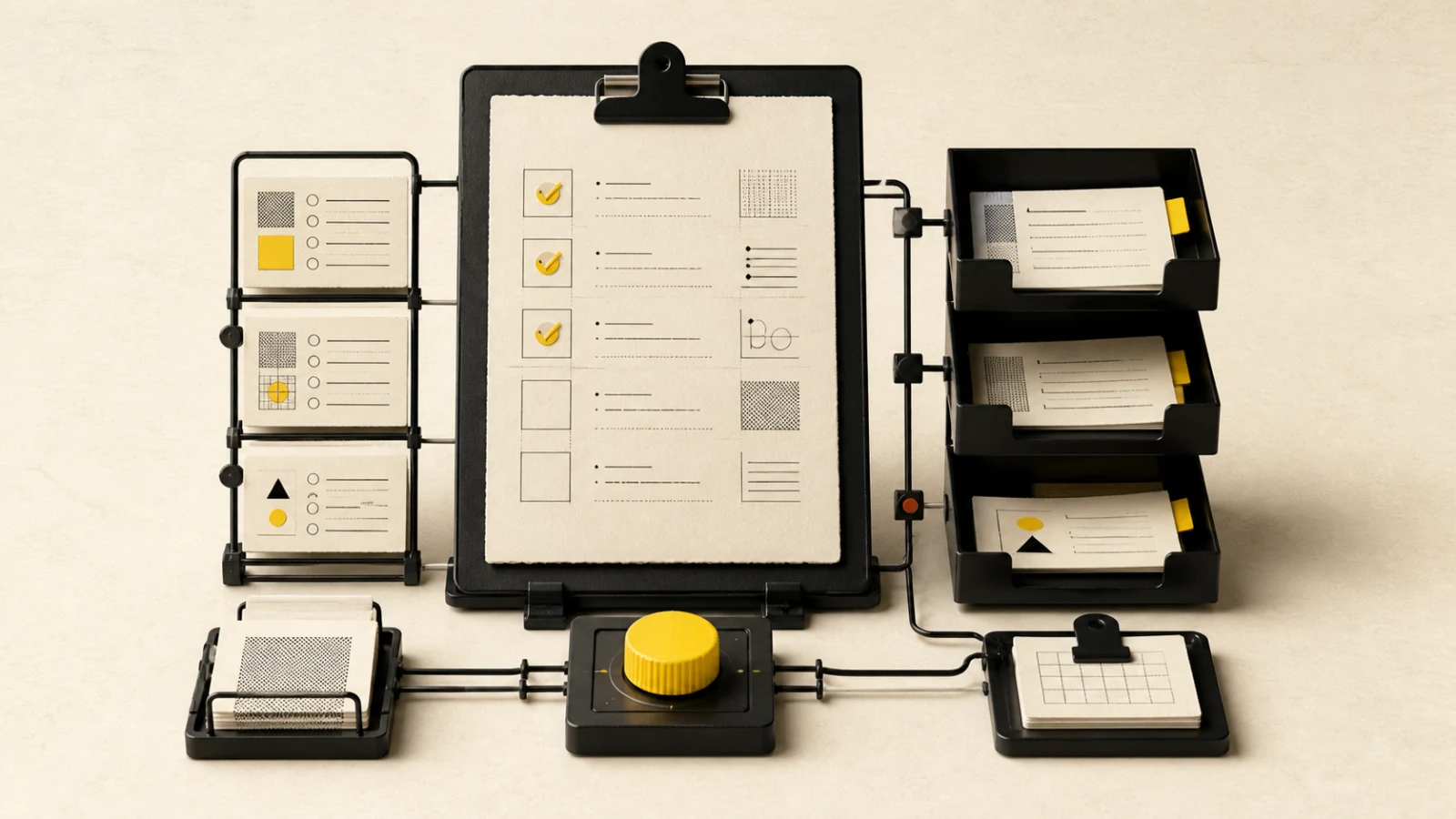
This checklist is for a focused production session, not an open-ended brainstorming day. The point is to leave the session with concrete content in a usable state.
Before the batch
- choose one platform or format;
- define the output count;
- gather references and sources;
- prepare the brief;
- assign reviewers;
- block a clean work window;
- decide what will be published after the batch.
During the batch
- stick to one content pattern at a time;
- finish one piece before starting the next;
- capture questions immediately;
- avoid opening unrelated tasks;
- keep assets and copy together;
- mark anything that still needs review.
After the batch
- verify the draft set against the target count;
- send the review package;
- record blocked items;
- move approved items into the calendar;
- note what should change in the next batch.
For planning structure, pair this with Social Media Calendar Guide: How to Plan, Batch, Review, and Publish.
Download the English content batching CSV or the Chinese content batching CSV. Use one row per batch and keep draft or asset links in the team’s approved workspace.
Before the batching session
- Define the batch objective, content horizon, formats, target count, and timebox
- Confirm briefs, sources, claims, rights, destinations, and campaign dates
- Remove items that still require strategy, legal interpretation, or missing evidence
- Group work by research, writing, recording, design, adaptation, or scheduling
- Assign facilitator, creators, reviewers, approver, and handoff owner
- Reserve review capacity and reactive capacity outside the batch
- Prepare templates, naming rules, folders, equipment, and accessibility requirements
During the batching session
Work in a single production mode long enough to reduce context switching, then use a deliberate handoff. Track planned and completed items without rewarding unfinished volume. Flag blocked work with an owner and reason rather than letting it follow the batch silently.
Use short quality gates: evidence present, brief followed, hook and CTA coherent, format appropriate, rights known, accessibility planned, and next reviewer identified. Stop when fatigue begins to create repeated corrections.
After the batching session
- Reconcile planned, completed, blocked, rejected, and deferred items
- Send review packages with exact versions and due times
- Record unused drafts and decide whether to revise, archive, or discard them
- Move only approved versions into the publishing calendar
- Measure focused time, review cycles, corrections, and accepted output
- Record one improvement for the next session
Stop conditions and retrospective
Pause the batch when source evidence is missing, rights are uncertain, a material brief decision changes, the destination account is unclear, the reviewer cannot absorb more work, or quality declines. A smaller accepted batch is more valuable than a large inventory of unsafe drafts.
Review whether batching reduced elapsed work and interruptions without increasing rework, approval delay, stale content, or unused inventory. Keep the method only where the evidence supports it.