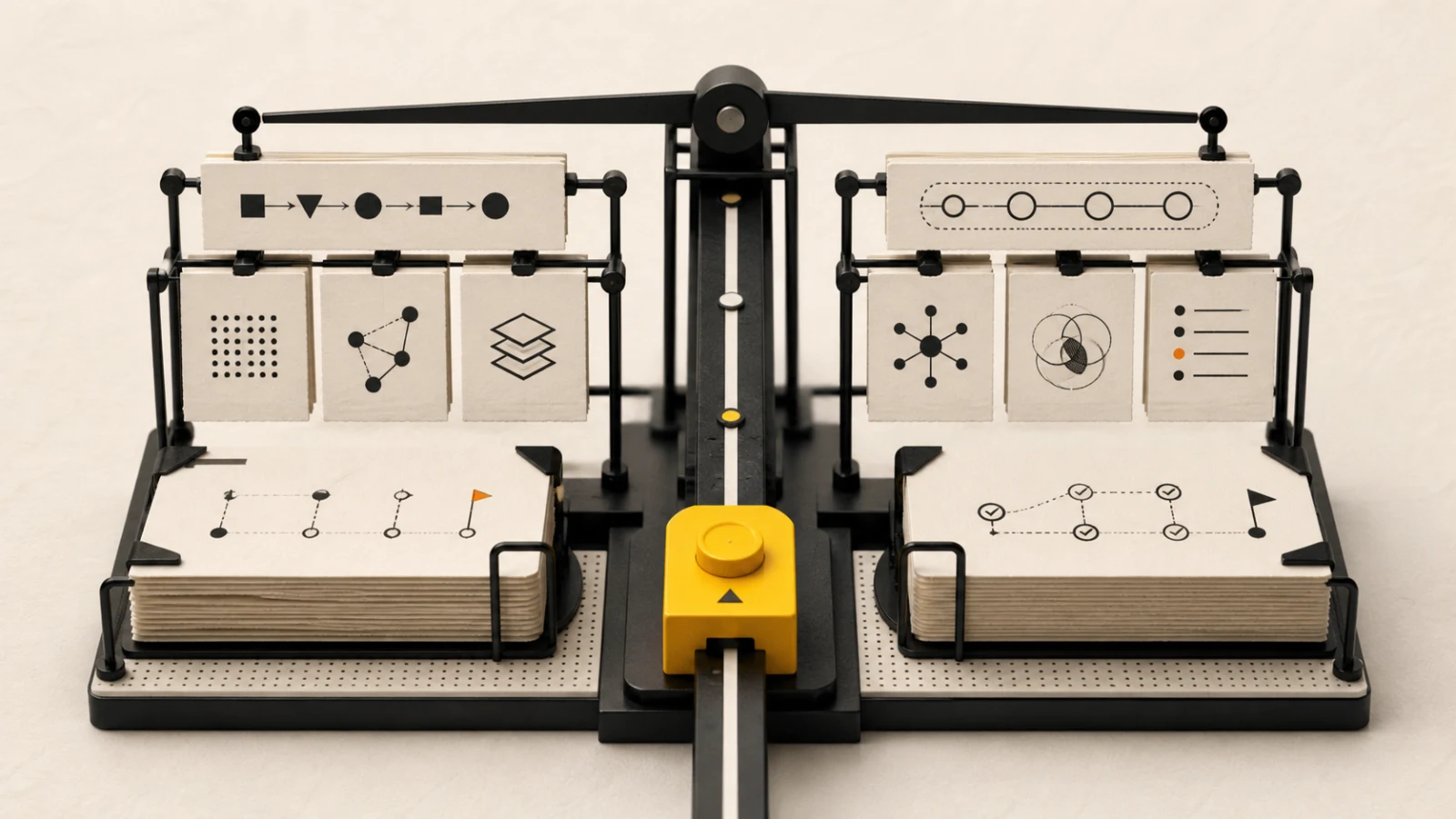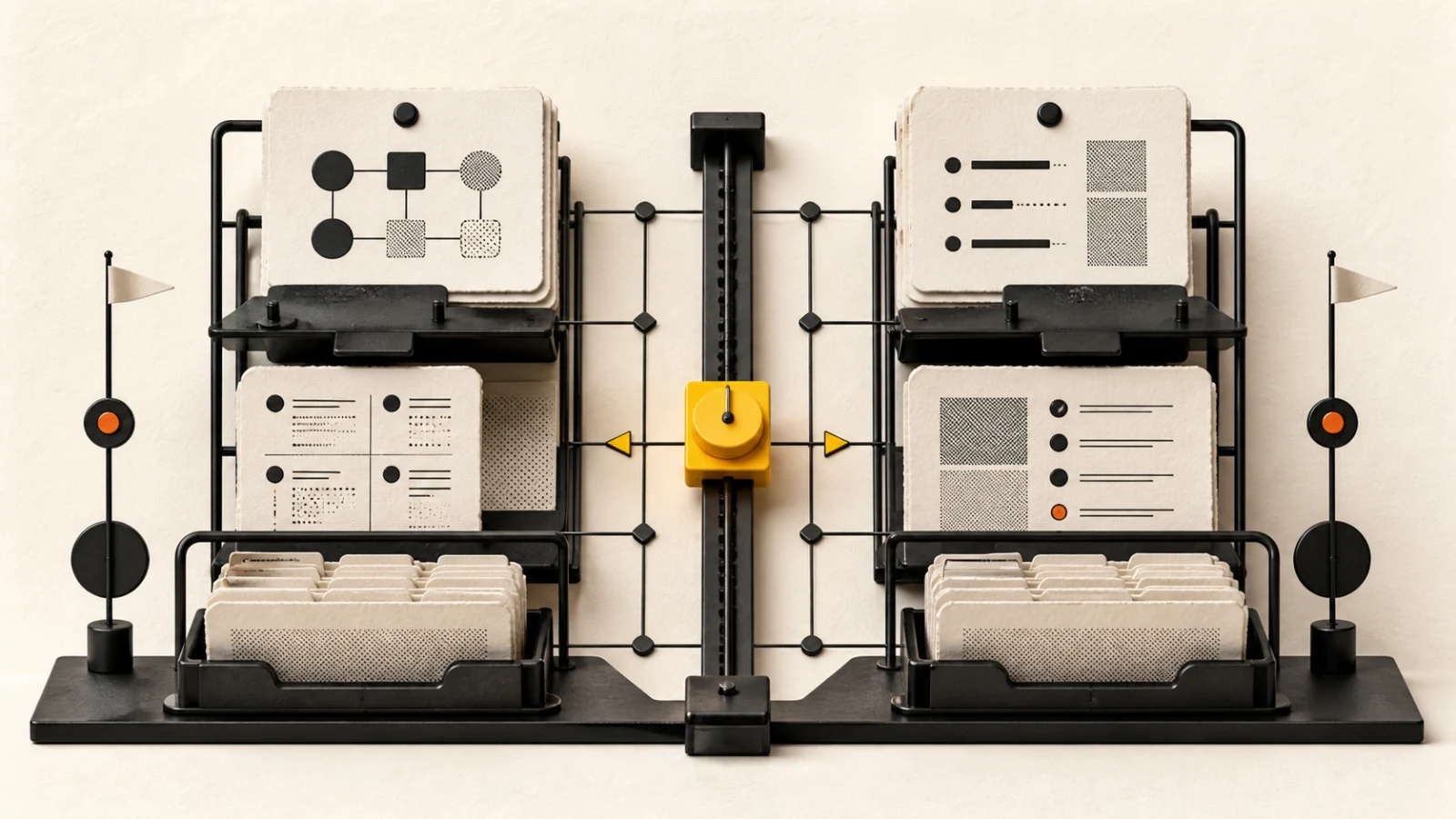
BlendDuck and Buffer can both help a team create and publish social content, but they begin from different product assumptions. Buffer is a mature hosted product designed to make social media management approachable. BlendDuck is a self-contained application designed to connect human operators, AI agents, APIs, and social providers through one explicit operating model.
This comparison focuses on architecture and workflow fit. It does not declare a universal winner, and it does not quote prices that may change. Review the linked official pages before purchasing either product.
At a glance
| Dimension | BlendDuck | Buffer |
|---|---|---|
| Primary shape | Configurable social operating system | Hosted social media management product |
| Deployment | Node, Cloudflare, Vercel, or Docker-oriented deployment options | Vendor-operated cloud service |
| Data layer | Configurable Postgres or SQLite/D1 with configurable object storage | Managed by Buffer |
| Human workflow | Creation, variants, approvals, scheduling, history, analytics, inbox | Create, Publish, Insights, Community, Collaborate, and related tools |
| AI and agents | Brand-context assistant plus OAuth-protected MCP and public API | AI Assistant plus public API and automation ecosystem |
| Best fit | Teams that need infrastructure control, extensibility, or agent-native operations | Creators and teams that prioritize quick adoption and hosted convenience |
The biggest difference is ownership
With Buffer, the team adopts a hosted product. Buffer operates the application and presents a polished workflow across its product areas. That reduces infrastructure work and makes trial and onboarding straightforward.
With BlendDuck, the deployment can be operated by the organization or its chosen platform. The application, native API routes, AI assistant, MCP tools, database, jobs, and provider layer belong to one deployable system. This increases control but also makes technical ownership part of the decision.
Choose hosted convenience when the organization wants to focus almost entirely on content operations. Choose configurable infrastructure when data location, extension, deployment portability, or product integration is strategically important.
Content creation and brand context
Buffer publicly offers Create and an AI Assistant for developing, refining, and repurposing content. Its template library and educational content give creators a broad supply of prompts and practical ideas.
BlendDuck centers content creation on a workspace Brand Soul, selected knowledge, briefs, and channel-specific variants. The goal is not merely to generate more captions, but to keep audience, positioning, evidence, exclusions, and approvals connected to the content lifecycle.
The practical test is simple: ask both products to adapt one campaign to three channels, then inspect whether the variants preserve the same factual core while changing structure, format, and audience behavior. Review not only the draft quality but also how the product stores the context behind the draft.
Collaboration and approval
Buffer includes a Collaborate product area and team capabilities. Verify the current plan requirements for draft approval, roles, and account access on Buffer's official pages.
BlendDuck models approvals as versioned, scoped decisions with roles, deadlines, comments, history, and invalidation rules. The wider application also keeps each channel target's content and delivery state independent inside one logical post.
Teams with light review may prefer the simplest available workflow. Teams with regulated claims, client approval, multiple regions, or higher publishing risk should test whether the product can answer four questions without ambiguity:
- Which exact version was approved?
- Which channels and accounts were included?
- What changed after approval?
- Who can publish or retry the post?
Publishing reliability
Most product comparisons stop at “supports scheduling.” That misses the operational risk. A provider may reject media, expire a token, accept a request without immediately confirming the public URL, or publish only part of a multi-channel campaign.
BlendDuck exposes provider validation and distinct lifecycle states so a team can separate scheduled, sending, accepted, live, retrying, failed, and unknown outcomes. It also uses idempotency and content deduplication in supported workflows to reduce accidental repeats.
Buffer has years of experience operating a hosted publishing service across major social networks. When evaluating it, inspect how the current product communicates channel limitations, failed posts, retries, and confirmation. Use a real media post during the trial rather than judging the calendar alone.
Analytics and learning
Buffer's public Insights offering emphasizes performance understanding and what to post next. Buffer also publishes large external benchmark studies drawn from its dataset, which can help teams understand broad patterns.
BlendDuck Analytics stores provider-shaped data, preserves platform-specific metrics, supports workspace and channel comparisons, saved views, exports, custom reports, and explicit data-freshness states. Its emphasis is traceability: a report should show what decision it supports and where the data came from.
For either product, test whether the report can distinguish zero from missing data, preserve platform definitions, explain reporting delay, and connect a result to the next editorial experiment.
API, automation, and AI agents
Buffer has a public API and an established automation ecosystem. Its API is a good fit when another application needs to send content into a widely used hosted service. Confirm current endpoints, limits, and supported actions in Buffer's developer documentation.
BlendDuck exposes a versioned public API, generated SDK pipeline, webhooks, and an OAuth-protected MCP server. Dashboard and agent actions share application services rather than behaving like unrelated products. This matters when the organization wants Codex, ChatGPT, Claude, Cursor, an internal workflow, or an embedded product to operate against the same tenant and permission boundaries.
The differentiating question is not “Does it have an API?” It is “Can the API or agent perform the exact task with the same authorization, idempotency, audit, and recovery rules as the dashboard?”
Who should choose Buffer?
Buffer is likely the better starting point when:
- the team wants a proven hosted product with minimal infrastructure responsibility;
- creators or small businesses value templates, education, free tools, and quick onboarding;
- the primary need is a clear dashboard for ideas, publishing, engagement, and performance;
- the organization does not need to control the application database or deployment.
Who should choose BlendDuck?
BlendDuck is likely the better fit when:
- the team needs self-hosting or configurable infrastructure;
- AI agents and internal software must operate through scoped API or MCP tools;
- approval, publishing state, recovery, and audit evidence require explicit modeling;
- the application must extend across many providers while preserving their differences;
- the organization accepts the responsibility of operating or commissioning the deployment.
Run a fair trial
Use one campaign and test the same sequence in both products: write a brief, draft three variants, attach media, request approval, change one approved field, schedule the content, simulate or observe a provider error, and produce a decision-ready report. Record the time, ambiguity, missing capabilities, and recovery work.
Subscription cost is only one component. Add staff time, implementation, maintenance, and the cost of publishing mistakes with the operating cost calculator.
Sources and review note
Reviewed August 23, 2026. BlendDuck is not affiliated with Buffer.